CN Soft Serve CN Soft Serve

How to Choose the Best Snow Cone Machine for Your Business?

Time:2026-11-13 Author:Madeline
0%

Choosing the right Snow Cone Machine can shape more than your menu. It affects service speed, product consistency, cleanup time, and the queue forming beside your counter. A compact unit may suit a weekend stand, while a busy concession booth may need greater output and a larger ice capacity. The best choice depends on your real service conditions, not just the machine’s advertised production rate.

Look closely at the details customers rarely see. Can staff feed ice quickly during a rush? Is the shaving texture even, or does the machine leave coarse chunks in the cup? Where will melted water drain? A machine that looks sturdy on a product page may feel different after hours of use. Small details matter.

A useful buying principle is: “Choose for your busiest hour, not your quietest afternoon.” This is an original editorial line, not a verified quotation, and no source was provided for a named industry expert. Add a named expert’s quotation only after confirming its wording and attribution. That extra check is worthwhile.

This guide will help you compare machine types, output, durability, ease of cleaning, and operating costs. It will also consider practical needs such as counter space, staff training, and replacement parts. No single model suits every business. The right Snow Cone Machine is the one your team can operate reliably when the line grows, the ice bin runs low, and customers are waiting.
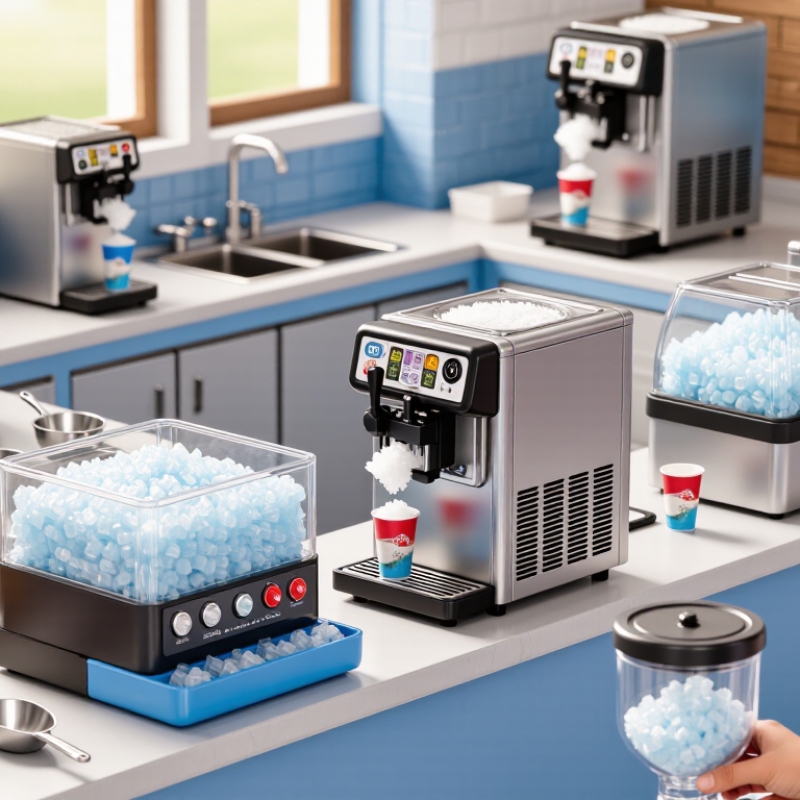
How to Choose the Best Snow Cone Machine for Your Business?

Identify Your Business Needs and Expected Sales Volume

How to Choose the Best Snow Cone Machine for Your Business?

Identify Your Business Needs and Expected Sales Volume

Start by picturing a typical service period. A school event may bring a short, intense rush, while a beach kiosk could serve customers steadily for hours. Estimate how many cones you expect to sell during your busiest hour, not just across the whole day. That figure helps you judge the machine’s output, ice storage, and refill needs. Also consider your menu: larger servings or several syrup options can slow service and require more counter space.

Tips: Track customer counts during busy periods. Check how often staff can refill ice. Leave room for cups, syrup bottles, and a drain tray.

Sales estimates are rarely perfect. Weather, location, and local events can change demand quickly, so avoid choosing capacity based on your best day alone. A machine that cannot keep up may create long lines; an oversized one can take up valuable space and cost more to operate. Ask who will run it, how many workers can serve, and where clean ice will be stored. Then compare those practical needs with the machine’s stated production rate, remembering that real output can vary with ice preparation and operator pace. A small trial run can reveal bottlenecks you may miss on paper.

Compare Snow Cone Machine Types and Production Capacity

Snow cone machines generally fall into manual, countertop electric, and high-output commercial types. A manual shaver suits occasional service or a small cart, but each serving takes more staff time. Countertop electric models reduce effort and fit tight spaces. Commercial machines are designed for longer shifts and repeated orders, though they need more room, power, and cleaning time. Ice texture matters too: a finer shave absorbs syrup differently from coarse, crunchy ice. Test a sample before choosing.

Compare capacity by looking beyond the advertised servings per hour. Ask how much ice the machine processes in a continuous run, how quickly it recovers between batches, and whether its hopper holds enough ice for a rush. A simple estimate helps: if each serving uses about six ounces of ice, twenty pounds provides roughly fifty servings before waste. Real output may be lower when staff refill cups, add syrup, or clear jams. Those small pauses add up.

Match the machine to your busiest likely hour, not an average afternoon. A school event or market queue can overwhelm a small unit quickly. If possible, run a timed test with the cup size and ice you plan to use. Listen for strain, check for uneven shaving, and note how often you must refill. Capacity claims are useful, but they are not the whole story. I would rather have a slightly slower machine that runs steadily than a fast one that needs constant attention.

How to Choose the Best Snow Cone Machine for Your Business? - Compare Snow Cone Machine Types and Production Capacity
Machine Type Indicative Sustained Output Best Fit Ice and Operation Space and Setup Key Trade-Off
Manual hand-crank Low; suitable for occasional servings rather than continuous service Small events, tasting stations, or businesses testing demand Requires operator effort; ice shape and hardness affect speed and texture Compact and typically needs no electrical outlet Lowest equipment complexity, but output depends heavily on the operator and can be difficult to sustain during a rush
Electric countertop Low to moderate; suited to short service periods and steady, limited demand Cafés, concession counters, and seasonal businesses with modest volume Usually needs prepared ice that fits the machine’s feed opening; check the specified ice size Small footprint; confirm outlet requirements and counter stability Convenient for everyday use, but the motor, hopper, and feeding rate may limit peak-hour production
Commercial single-head electric Moderate to high; appropriate for regular service and busy periods Food stands, mobile vendors, and event concessions Designed for repeated operation; ice preparation and replenishment remain important Requires a sturdy counter or cart and an electrical supply that meets the machine specifications Good balance of throughput and footprint; one shaving head can become a service bottleneck in a large rush
Commercial high-output or dual-head High; designed for sustained, heavy demand when properly staffed Amusement venues, busy festivals, and high-volume concession locations Needs a reliable supply of suitable ice and an organized workflow for filling and serving cups Larger and heavier; check electrical load, ventilation, workspace, and transport needs Can support faster service, but requires more space, investment, ice storage, and staffing

Capacity planning note: Machine output varies by model, ice temperature and shape, operator technique, and whether the quoted rate is a short-run maximum or a sustained rate. Compare manufacturer-rated output under similar conditions, then allow for time spent loading ice, filling cups, and serving customers. Before purchasing, verify the machine’s power requirements, dimensions, warranty, and cleaning instructions.

Evaluate Ice Texture, Speed, and Ease of Operation

A snow cone machine should produce ice that suits your menu, not merely look powerful on a counter. Check whether the finished ice is fine and fluffy or coarse with hard pieces. Texture affects syrup coverage, serving consistency, and how quickly a cone melts. Test the machine with the ice you plan to use. Run several batches, then inspect them under the same conditions. Small differences matter. A neat specification sheet can still mislead.

Speed matters most during a rush. Time how long the machine takes to prepare a serving, then repeat the test after several minutes of steady use. Some machines slow down as ice needs replenishing or the motor warms. Record the results rather than relying on a single quick demonstration. Estimate your busiest hour and compare that demand with the machine’s sustained output. Leave a little room for delays; real service is rarely perfectly smooth.

Ease of operation affects both staff training and daily cleanup. Look for clear controls, stable placement, and safe access to the ice chamber. Ask a staff member to operate it and refill it, ideally while wearing the gloves used at work. Are the steps obvious? Check how easily the chute and removable parts can be cleaned, and whether melted water drains without pooling. A machine that is fast but awkward may slow the whole counter. Reconsider your choice if routine cleaning feels like a chore.

Check Durability, Cleaning Requirements, and Utility Needs

How to Choose the Best Snow Cone Machine for Your Business?

A snow cone machine works hard during a rush, so inspect its frame, blade housing, and moving parts before buying. Ask the supplier about expected service life and replacement-part availability; a sturdy exterior means little if a small gear is difficult to source. Check the warranty terms, too. Read the fine print.

Cleaning matters as much as construction. Look for removable ice-contact parts and smooth surfaces that staff can reach without special tools. NSF/ANSI 2 sets sanitation requirements for commercial food equipment, making it a useful reference when checking a machine’s design and documentation. Ask how the chute, ice chamber, and drain should be cleaned, and whether parts can air-dry fully between shifts. A missed crevice can become a recurring headache.

Match the machine to your actual utilities. Confirm voltage, amperage, plug type, and drainage needs against the site before ordering; a machine that requires a new circuit can raise installation costs. If you use a separate commercial ice maker, ENERGY STAR reports that certified models use at least 15% less energy and 23% less water than standard models. Those figures apply to ice makers, not snow cone shavers. Estimate peak servings, not just daily averages. That estimate may still be imperfect, so leave room for busy afternoons.

Compare Total Costs, Warranty, and Service Support

When choosing a snow cone machine, compare more than purchase prices. Estimate the full cost over three years: electricity, cleaning supplies, replacement blades, water handling, and expected repairs. Check the machine’s rated output against peak demand. A slow machine can leave customers waiting while ice melts in the bin. The National Restaurant Association’s 2024 State of the Restaurant Industry report found that 45% of operators said their businesses were not profitable in 2023. Tight margins make small recurring costs matter.

Read the warranty before buying. Confirm its length, which parts are covered, and whether labor or shipping is included. Ask whether normal wear on blades is excluded. Get the answer in writing. A long warranty is not much help if a failed motor takes weeks to replace. Keep the receipt and warranty terms somewhere staff can find them.

Service support matters most during a rush. Ask how quickly a technician can respond, whether local repair is available, and how common parts are stocked. A spare blade may be inexpensive; a machine sitting idle on a hot Saturday is not. Compare the cost of routine maintenance with the cost of downtime. A spreadsheet helps, but it cannot predict every rush. That part is easy to underestimate.

FAQS

How should I estimate the machine capacity my business needs?

Count expected servings during your busiest hour, not just the whole day. A school event may bring a sudden rush. Estimates can still be off.

How can I check whether a machine can keep up?

Time several batches during a steady test. Compare sustained output with your busiest-hour estimate. Leave room for refills and delays.

What ice texture should I look for?

Test the ice you plan to use. Fine, fluffy ice holds syrup differently from coarse pieces. Small differences matter.

What should staff try during a demonstration?

Have a staff member operate the machine and refill it. Check whether the controls and ice chamber are easy to use. Try work gloves, too.

Which details make cleaning easier?

Look for removable ice-contact parts and smooth surfaces. Check that the chute and drain are reachable. No pooled water.

How can I assess durability before buying?

Inspect the frame, blade housing, and moving parts. Ask about service life and replacement parts. Read the warranty terms.

What utility requirements should I confirm?

Match voltage, amperage, plug type, and drainage with your site. A new electrical circuit could add installation costs.

Should I leave extra room for supplies?

Yes. Allow counter space for cups, syrup bottles, and a drain tray. Check where clean ice will be stored. The layout may still need adjusting.

Conclusion

Choosing the right Snow Cone Machine starts with understanding your business needs, including expected customer traffic, serving hours, and the volume of cones you plan to sell. Compare machine types and production capacities to find an option that can keep up with demand without taking up more space or using more power than necessary. Consider the ice texture and how quickly the machine produces consistent servings, as well as whether its controls are straightforward for staff to use during busy periods.

Before making a decision, assess the machine’s durability, cleaning routine, and utility requirements. A model that is easy to maintain can help simplify daily operations, while suitable construction and capacity support reliable performance over time. Finally, compare the total cost of ownership—not just the purchase price—along with warranty coverage and access to service support. Balancing these factors can help you select a machine that fits your workflow, budget, and sales expectations.

Madeline

Madeline

Madeline is a dedicated marketing professional with a wealth of expertise in our company's core offerings. With a keen understanding of the industry, she brings a unique perspective to her role, consistently delivering high-quality content that highlights the superior aspects of our products. As......