CN Soft Serve
A Frozen Treat Dispenser is more than a countertop machine that releases ice cream, gelato, yogurt, or another chilled dessert. It combines refrigeration, mixing, portion control, and dispensing in one compact system. The result should be smooth, cold, and consistent. Usually.
Foodservice equipment specialist Marcus Lee explains, “A dispenser succeeds when temperature control, product texture, and cleaning discipline work together.” That idea matters because a machine can look impressive while producing soft portions, icy edges, or uneven servings. Inside the cabinet, a cooling system lowers the mixture’s temperature. A motor then turns a beater or auger, preventing the product from freezing into a solid block. When the handle moves, pressure pushes the prepared dessert through a nozzle.
The details become visible during a busy service period. A properly adjusted unit can deliver a neat swirl into a chilled cup. An overloaded hopper may slow the flow. A worn seal can create drips near the dispensing head. Even the room’s heat can affect performance. These practical variables deserve attention.
This guide will examine the main components, operating cycle, temperature controls, and basic maintenance needs of a Frozen Treat Dispenser. It will also consider where explanations become too simple. Not every dispenser works identically. Some use gravity. Others depend on pressure. Some hold premixed product, while others freeze liquid ingredients during service. Understanding those differences helps operators choose equipment wisely and avoid unrealistic expectations. A reliable machine still needs careful setup, regular cleaning, and informed human judgment.
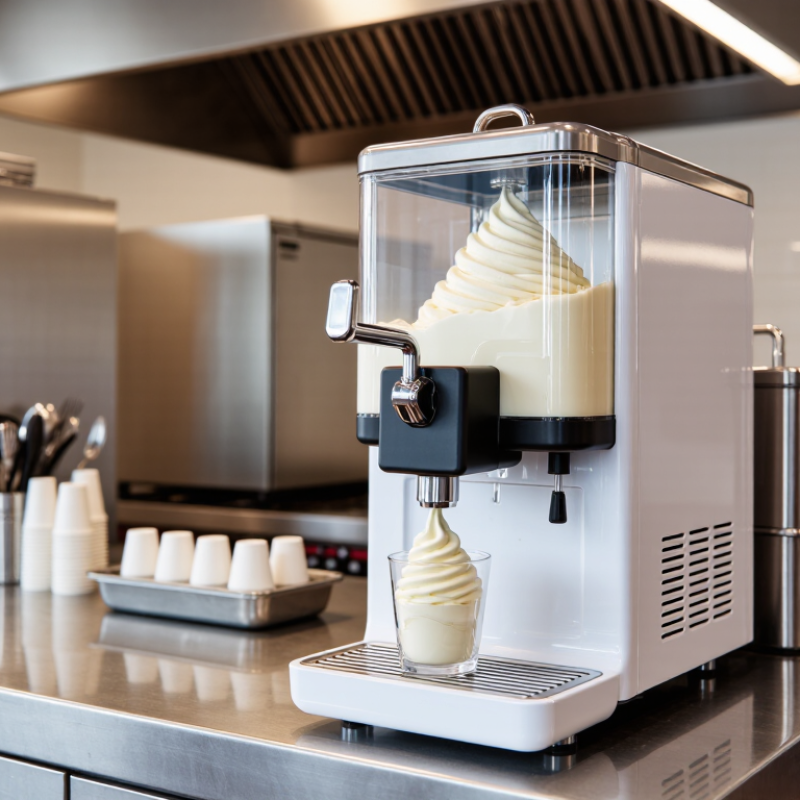
A frozen treat dispenser is a food-service machine that stores, chills, mixes, and releases frozen desserts. Unlike a simple freezer, it keeps the mixture moving while maintaining a controlled serving temperature. This movement helps reduce ice crystals and creates a smoother texture. Many models use a refrigerated hopper, an internal mixing blade, and a dispensing handle.
What does it serve? The answer depends on the machine’s design and the prepared mixture. Common options include soft-serve ice cream, frozen yogurt, sorbet, gelato-style desserts, and flavored slush. Some dispensers handle dairy-based recipes, while others suit fruit-based or plant-based formulas. The mixture enters a cold chamber, where it freezes gradually. A rotating dasher then folds in a small amount of air before the dessert reaches the outlet.
Texture can change quickly. Too much air may make the treat feel weak, while insufficient mixing can produce a dense, icy portion. The first serving may also be less consistent than later ones. That detail is easy to overlook. Operators should check the product temperature, clean food-contact parts carefully, and follow the machine’s maintenance instructions. A dispenser is convenient, but it does not correct a poor recipe or careless handling. Fresh ingredients, accurate measurements, and regular observation still matter.
A frozen treat dispenser turns a chilled liquid mix into a smooth, portioned dessert. Its internal parts must control temperature, texture, and serving speed. The main components include a mix hopper, freezing cylinder, dasher, compressor, condenser, pump, control panel, and drip tray.
The hopper stores the prepared mix before it enters the freezing cylinder. Inside that cylinder, a refrigerant system removes heat from the product. The dasher then scrapes frozen material from the cold wall and folds air into the mixture. The result should feel creamy, not icy. The cylinder matters most. If the dasher moves too slowly, ice crystals can grow and create a rough mouthfeel. If it moves too quickly, the dessert may become thin and unstable.
A pump or gravity system moves the mix toward the dispensing valve. The control panel monitors temperature, viscosity, and cleaning cycles. Technicians usually check the condenser first when cooling becomes weak, because dust can restrict airflow. The U.S. Food and Drug Administration’s 2022 Food Code identifies 41°F (5°C) as the cold-holding limit for many time-sensitive foods. USDA Economic Research Service data also places U.S. per-person availability of ice cream and related frozen desserts at roughly 23 pounds in 2022. That demand makes reliable portion control important. Yet temperature readings alone can mislead. A clean sensor does not guarantee a clean valve, and operators sometimes overlook the drip tray.
A frozen treat dispenser combines mixing, freezing, and controlled serving in one machine. It usually holds liquid treat mixture in an insulated hopper. A small agitator keeps ingredients moving, so solids do not settle at the bottom. Refrigeration then keeps the mixture cold before processing begins.
When a serving is requested, a pump moves the mixture into a freezing cylinder. An evaporator wrapped around the cylinder removes heat from the liquid. Inside, a motor-driven scraper keeps the mixture from sticking to the cold walls. This action also adds a small amount of air, creating a smoother texture. Temperature sensors monitor the cylinder and adjust cooling as the mixture thickens.
Texture matters greatly.
The partially frozen treat remains in the cylinder until it reaches the selected consistency. A dispensing valve then releases the product through a front outlet. Some machines return unused mixture to the freezing area, while others maintain it in a chilled storage hopper. Insulation reduces temperature changes during busy service periods. Still, performance is not perfectly uniform. A thick recipe, frequent opening, or poorly calibrated sensor can change the texture. In practice, operators should check the mixture, temperature readings, and cleaning condition regularly. Small errors can produce icy edges, soft centers, or uneven servings. Storage time also depends on the recipe, equipment design, and approved food-handling procedures.
Typical temperature targets as the treat mixture moves from chilled storage to frozen dispensing
A frozen treat dispenser keeps the liquid mixture cold in a refrigerated hopper, then moves it into a freezing cylinder. A cooling system removes heat while an auger continuously mixes and scrapes the partially frozen product from the cylinder walls. This creates a smooth, semi-frozen texture that is held near serving temperature until the dispensing valve is opened. Exact settings vary by recipe and machine design.
A frozen treat dispenser stores a chilled mixture in a refrigerated hopper, then pushes it through a controlled dispensing valve. The user places a cup beneath the nozzle and pulls the handle slowly. This movement opens the valve and activates an auger or pump. The mechanism moves product forward while limiting air entry. Release the handle, and the valve closes.
The process feels simple. It is not foolproof. If the handle is pulled too quickly, the portion may splash or become uneven. A partially frozen mixture can also strain the motor and create a rough texture. Operators should check the display, confirm the hopper temperature, and use a clean, dry cup before dispensing. The 2022 FDA Food Code recommends holding cold food at 41°F (5°C) or below, so temperature checks remain essential. That standard supports safer operation, although local requirements may differ.
A 2024 Grand View Research report projects continued growth in foodservice equipment, with automation and portion control driving demand. This trend explains the use of measured valves and sensor-based controls. Still, automation does not replace judgment. Operators should watch the first serving after cleaning, inspect the nozzle seal, and remove buildup immediately. A small drip can reveal a worn gasket. That detail is easy to miss. Proper cleaning frequency should follow the equipment manual and applicable sanitation guidance, not convenience.
What Is a Frozen Treat Dispenser and How Does It Work?
A frozen treat dispenser combines chilling, mixing, and controlled portioning in one enclosed unit. Its safety depends on clean food-contact surfaces and reliable temperature control. Cleaning is not cosmetic. Before opening the cabinet, switch off and unplug the dispenser, unless the operating manual requires another procedure. Keep hands away from rotating paddles, augers, and sharp edges. Only trained staff should remove internal parts.
Drain leftover product according to the manufacturer’s instructions. Detach the nozzle, drip tray, seals, and mixing components carefully. Wash them with warm water and an approved food-contact detergent. Rinse thoroughly, then apply the correct sanitizer concentration. Never mix cleaning chemicals. Allow parts to air-dry completely before reassembly. A quick rinse feels sufficient, but it is not.
Daily checks should include unusual noise, leaks, ice buildup, loose fittings, and damaged seals. Wipe the exterior and clean spills immediately, especially around buttons and vents. Confirm that the dispenser reaches the required operating temperature, using the manual and applicable food-safety guidance. Keep a simple maintenance log with cleaning times, sanitizer checks, and observed faults. This record supports consistent work and helps identify repeated problems. In practice, rushed reassembly is a common weakness. A misplaced gasket can cause contamination or poor freezing. When something feels wrong, stop operation and request qualified service instead of forcing the machine.
Key parts include the hopper, freezing cylinder, dasher, compressor, condenser, pump, control panel, and drip tray.
It removes heat from the liquid mixture and helps create a smooth, semi-frozen texture. The cylinder matters most.
The dasher scrapes frozen material from the cold wall and folds air into the mixture. Too slow can create ice crystals. Too fast may make the dessert thin.
A pump or gravity system moves the mixture toward the dispensing valve. The valve releases controlled portions through the front outlet.
Thick recipes, frequent opening, or poorly calibrated sensors can change freezing performance. You may see icy edges or soft centers.
Check the condenser for dust and restricted airflow. Also inspect sensors, temperature readings, seals, and unusual ice buildup.
Switch off and unplug the dispenser when required by the manual. Remove the nozzle, drip tray, seals, and mixing parts carefully. Wash, rinse, sanitize, and air-dry them fully.
Keep hands away from rotating paddles, augers, and sharp edges. Never mix cleaning chemicals. Do not force a faulty part.
Record cleaning times, sanitizer checks, leaks, noise, and damaged seals. Check the operating temperature regularly. Records help. Still, they are not perfect. A clean sensor does not prove that the valve is clean.
A Frozen Treat Dispenser is a specialized machine designed to chill, hold, and serve soft frozen desserts, chilled beverages, or similar treat mixtures in controlled portions. Its main internal components typically include an insulated storage chamber, cooling system, mixing or agitation mechanism, dispensing valve, temperature controls, and a drip tray. Together, these parts help maintain a smooth texture while keeping the mixture cold and ready to serve.
The machine generally cools the prepared mixture while gently stirring it to reduce the formation of large ice crystals. Once the desired consistency is reached, users activate the dispensing handle or button to release the treat through the outlet. Proper cleaning and routine maintenance are essential for safe, reliable operation. This includes emptying leftover mixture, washing and sanitizing food-contact parts, checking seals and valves, clearing the air vents, and inspecting the cooling and mixing systems regularly. Following the operating instructions helps preserve product quality, hygiene, and machine performance.
