CN Soft Serve
Choosing the right Water Dispenser can quietly improve a workplace’s daily rhythm. Employees notice when water is fresh, accessible, and consistently available. Visitors notice it too. A reliable unit near reception may support a professional first impression, while a high-capacity model can prevent queues during lunch breaks. However, appearance alone should not guide the decision.
Business needs vary by staff numbers, operating hours, floor layout, and water consumption. A small office may need a countertop dispenser with simple bottle replacement. A busy warehouse may require a plumbed-in system, rapid cooling, and a larger dispensing area. Check filtration performance, temperature options, noise levels, and power consumption. These details matter. A dispenser that sounds loud beside a meeting room can become an everyday annoyance.
Hygiene and maintenance deserve careful attention. Look for removable drip trays, sealed components, clear cleaning instructions, and accessible replacement filters. Confirm that the supplier provides documented specifications and responsive technical support. Independent certifications or recognized testing can add confidence, but claims should still be verified. Installation must suit local plumbing, electrical, and workplace requirements. Small oversights can create costly interruptions.
There is no universal best choice. A premium dispenser may exceed a small team’s needs, while a cheaper model may struggle under constant use. I have seen purchasing decisions focus on price, then overlook service visits and filter costs. That assumption can fail. Review expected usage, create a realistic maintenance budget, and ask staff how they actually use water facilities. The strongest choice balances reliability, hygiene, convenience, and long-term value. Reassess it after several months. Real workplace experience may reveal what specifications missed.
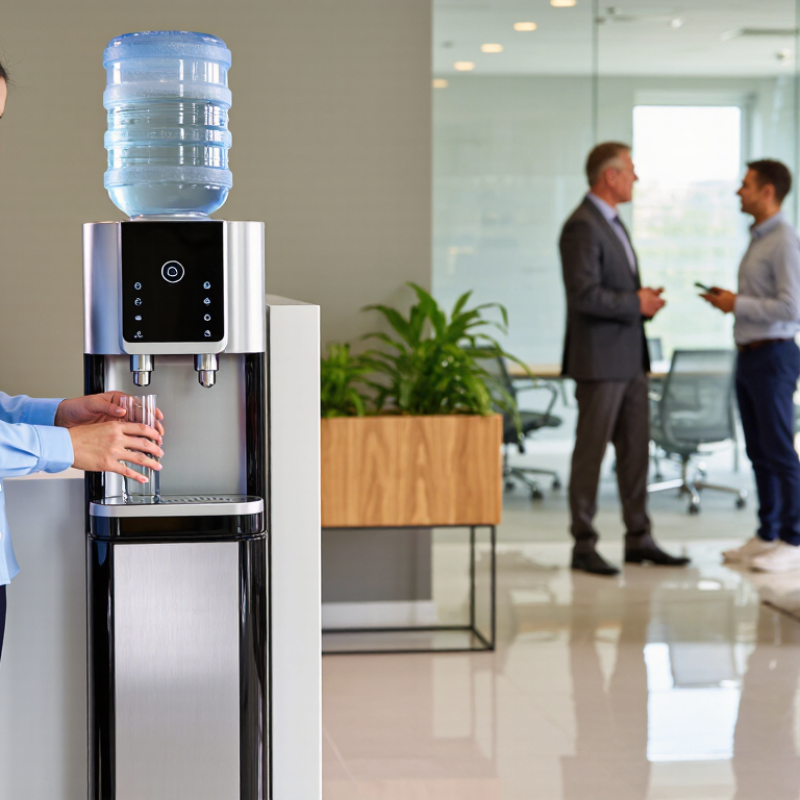
Choosing the right water dispenser starts with understanding how your business actually uses water. Count daily users, peak service periods, and the distance between the dispenser and work areas. A small office may need steady access for twenty employees. A busy clinic or workshop may need faster dispensing and a larger storage capacity. Do not rely only on staff numbers. Visitors, delivery teams, and seasonal workers can change demand quickly.
Track usage for several working days. Record refill times, empty bottles, waiting lines, and cleaning needs. These details reveal patterns that a simple monthly estimate may miss. Consider whether users prefer chilled, room-temperature, or hot water. Check the available floor space, power supply, drainage, and ventilation before selecting equipment. In my experience, placement affects usage more than expected. A dispenser hidden near a storage room may be technically suitable, but staff will avoid it.
Tips: Compare normal and peak demand. Leave extra capacity for busy days. Review the estimate after one month. A neat calculation can still be wrong. Ask employees what slows them down. Their answers may expose practical problems, such as crowded break areas or frequent refilling. Also, assign a person to monitor sanitation and filter replacement records. Reliable operation depends on consistent maintenance, not just dispenser capacity.
Choosing a dispenser starts with water demand, not appearance. Bottled dispensers suit temporary offices and irregular usage. They need storage space, deliveries, and bottle handling. Beverage Marketing Corporation reported 15.9 billion gallons of bottled water were sold in the United States in 2023. That scale shows convenience, but also highlights recurring packaging and logistics costs.
Point-of-use dispensers connect to a mains supply and filter water on site. They fit busy reception areas, factories, and shared kitchens. Look for certified filtration, cooling capacity, heating speed, and drainage design. Filters meeting NSF/ANSI 42 may improve taste and odor. NSF/ANSI 53 addresses selected health-related contaminants. Countertop units save floor space, while floor-standing models usually handle heavier traffic. EIA’s 2018 Commercial Buildings Energy Consumption Survey estimated water heating at 7% of commercial site energy use. An energy-saving hot-water mode can therefore matter, especially in large facilities. The figure is national, not a promise for your building.
Tips: Record peak-hour demand for one week. Check refill time, noise, filter replacement, and service access. A cheaper unit may look efficient, yet delivery fees can change the calculation. Measure twice. I would also question unusually low energy claims without test conditions. Water quality varies by location, so request independent performance data before choosing.
Compare common water dispenser types by their standard core features before selecting a solution for your workplace, retail site, hospitality venue, or public facility.
The comparison reflects typical standard configurations. Feature availability can vary by model and installation requirements. A value of 1 means the feature is commonly available in the standard configuration; 0 means it is generally not included.
How to Choose the Right Water Dispenser for Your Business?
Capacity should follow real usage, not showroom appearance. Count employees, visitors, shifts, and peak break times. A unit serving 80 people may struggle during a crowded morning. Peak hours matter. Allow extra capacity for meetings and seasonal demand, but avoid oversized systems that waste electricity and space. The U.S. Environmental Protection Agency’s 2023 Drinking Water Infrastructure Needs Survey estimates that drinking-water systems require 625 billion dollars in investment over 20 years. Reliable access deserves practical planning, not guesswork.
Filtration requires equal attention. Check the incoming water report before selecting a filter type. Sediment, chlorine, hardness, and microbial risks require different controls. NSF/ANSI 42 covers aesthetic impurities, while NSF/ANSI 53 addresses specific health-related contaminants. Certification must match the contaminant claim. The World Health Organization’s 2022 report found that 2.2 billion people lacked safely managed drinking water, showing why source quality cannot be assumed. Small errors compound.
Installation affects daily reliability. Confirm drainage, ventilation, electrical access, and clearance around the dispenser. A technically suitable unit can still fail in a cramped corner. Maintenance schedules should include filter replacement, sanitization, leak checks, and temperature verification. The U.S. Centers for Disease Control and Prevention recommends regular cleaning of water dispensers to reduce contamination risks. Keep records. In practice, staff may forget service dates, so visible logs or automatic reminders are useful. I would also review actual consumption after three months; initial estimates are often wrong.
| Business Environment | Typical Users | Recommended Daily Water Demand | Suitable Dispenser Type | Capacity and Flow Guidance | Filtration Requirements | Installation Considerations | Maintenance Priorities | Selection Recommendation |
|---|---|---|---|---|---|---|---|---|
| Small Office | Up to 25 employees | Approximately 15–40 liters per day, depending on working hours and drinking habits | Point-of-use countertop or compact floor-standing dispenser | Choose a unit with a chilled-water output of approximately 2–5 liters per hour and sufficient internal storage for peak breaks | Sediment filtration plus activated carbon filtration is generally suitable for municipal water; add fine filtration when the incoming water contains visible particles | Requires a nearby potable-water connection, drainage or drip-tray management, and a standard electrical outlet for chilled or heated functions | Replace filters according to usage and manufacturer instructions; clean the dispensing nozzles and drip tray regularly | Prioritize compact size, low noise, simple filter replacement, and easy access to cleaning components |
| Medium Office | 26–100 employees | Approximately 40–150 liters per day, with higher demand during breaks and meetings | High-capacity point-of-use floor-standing dispenser or bottleless multi-temperature unit | Look for chilled output of approximately 5–15 liters per hour and a larger reserve tank to reduce waiting during peak demand | Use a multi-stage system such as sediment, activated carbon, and optional membrane filtration when local water quality requires additional treatment | Confirm water pressure, inlet size, electrical load, ventilation clearance, and placement near a water line; avoid locations exposed to direct heat | Schedule filter replacement, internal sanitization, leak checks, and inspection of tubing and connections | Balance peak-hour recovery, filtration performance, footprint, and service accessibility |
| Large Office or Call Center | More than 100 employees | Approximately 150–400 liters per day, depending on occupancy and shift patterns | High-throughput plumbed-in dispenser system or multiple strategically placed units | Calculate demand by shift; consider multiple dispensing points when a single unit cannot serve peak traffic efficiently | Choose filtration based on a current water-quality assessment; multi-stage filtration may include sediment, carbon, and membrane treatment | Evaluate water-line capacity, drainage, electrical circuits, floor loading, ventilation, and access for technicians and replacement parts | Use a documented maintenance schedule covering filters, sanitation, pressure, temperature, leaks, and water-quality checks | Prioritize throughput, redundancy, service response time, and a clear total-cost-of-ownership plan |
| Retail Store or Showroom | Employees plus visitors and customers | Approximately 30–200 liters per day, depending on visitor traffic and operating hours | Floor-standing dispenser with a durable cabinet and high-visibility placement | Use demand estimates based on employee count plus visitor volume; provide enough chilled capacity for busy periods | Activated carbon can improve taste and odor; add sediment or membrane filtration when required by the incoming water quality | Place the unit on a stable, level surface away from customer traffic, direct sunlight, heat sources, and areas prone to impact | Clean high-touch surfaces frequently; inspect the drip tray, dispensing area, filters, and external panels | Choose a robust, easy-to-clean design with strong spill control and accessible service points |
| Restaurant, Café, or Hospitality Site | Staff and guests; potentially continuous daily use | Approximately 100–500+ liters per day, depending on service volume and whether water is used for food preparation | Commercial high-capacity plumbed-in dispenser or dedicated filtered-water system | Size the system for peak service periods, not only average daily consumption; verify recovery time for chilled and ambient water | Filtration must match the source water and intended use; sediment and carbon stages are common, while membrane treatment may be appropriate for specific water-quality concerns | Confirm compliance with local plumbing and food-service requirements, adequate drainage, water pressure, electrical supply, and hygienic installation | Maintain strict sanitation records, replace filters on schedule, check for scale buildup, and inspect all water-contact components | Prioritize hygiene, peak-flow performance, serviceability, and compatibility with local food-safety procedures |
| Warehouse, Factory, or Workshop | Employees working across shifts | Approximately 50–300 liters per day, influenced by workforce size, temperature, and physical activity | Rugged floor-standing unit or several units positioned near work areas | Select adequate storage and recovery capacity for shift changes; provide multiple units if travel distance would reduce access to drinking water | Use sediment filtration where supply lines may contain particles and carbon filtration for taste and odor; assess water quality before adding advanced treatment | Protect the dispenser from dust, vibration, forklifts, chemicals, and extreme temperatures; provide a level, accessible installation area | Increase cleaning frequency in dusty environments; inspect covers, vents, tubing, connections, and drip trays for contamination or damage | Prioritize durability, safe placement, simple maintenance, and reliable access during every shift |
| Healthcare, Education, or Public Facility | Staff, visitors, students, or patients | Approximately 50–400+ liters per day, depending on occupancy and operating schedule | High-capacity hygienic dispenser with touchless or low-contact operation where appropriate | Estimate demand by occupancy and peak periods; install multiple points when users are distributed across several floors or zones | Use a filtration configuration supported by a water-quality assessment and the facility’s hygiene policy; verify any treatment claims before purchase | Follow applicable accessibility, plumbing, electrical, hygiene, and building requirements; allow clear access for users and technicians | Keep written sanitation and filter-change records; clean contact surfaces and inspect all water pathways at defined intervals | Prioritize hygiene controls, accessibility, documented maintenance, and dependable service support |
Choosing a business water dispenser requires more than comparing purchase prices. Energy use quietly accumulates beside reception desks and factory floors. The U.S. Environmental Protection Agency reports that ENERGY STAR certified water coolers use about 30% less energy than standard models. Check annual kilowatt-hour figures, standby settings, and compressor performance before buying. A low purchase price can hide high operating costs.
Hygiene needs visible controls. Look for sealed water paths, removable drip trays, and smooth surfaces that staff can clean daily. The Centers for Disease Control and Prevention identifies water management as an important factor in controlling Legionella risks in building systems. Dispensers should support documented cleaning schedules, filter replacement records, and temperature checks. Small details matter. A neglected nozzle can undo an excellent filtration system.
Safety and compliance deserve equal attention. Select equipment tested against relevant electrical and sanitation standards, such as UL 399 and NSF/ANSI requirements where applicable. Local rules may also govern plumbing connections, backflow prevention, accessibility, and waste-water drainage. The U.S. Department of Energy’s 2023 Better Buildings report emphasizes measured energy performance rather than assumed savings. That is useful, but workplace conditions vary. A busy office may open the tap hundreds of times daily, while a warehouse faces dust, impact, and temperature changes. Test the dispenser in its real location, keep service evidence, and ask whether cleaning work will actually happen.
A suitable water dispenser should match your business volume, space, and daily routines. However, the supplier often matters more than the machine itself. Ask for service records, warranty terms, water-contact material details, and expected replacement intervals. A reliable supplier should explain these points clearly, not hide them in technical documents. Request references from similar workplaces. Their experience can reveal how quickly they handle leaks, filter changes, and temperature problems.
Calculate the total ownership cost before choosing the lowest purchase price. Include delivery, installation, electricity, filters, sanitation, repairs, staff time, and eventual replacement. For example, a cheaper dispenser may need frequent filter changes and create longer maintenance delays. Those small costs can become significant across several office locations. I once focused too heavily on the initial quote. The forgotten service visits changed the real budget. That mistake still influences how I compare equipment today. Your estimate may also be imperfect, so leave room for higher usage and unexpected repairs.
Tips: Ask suppliers for a three-year cost forecast. Compare identical usage assumptions. Check whether service visits include labor and travel. Measure the installation area carefully, including door clearance. Test the dispenser during busy hours if possible. Keep written records of maintenance promises. A supplier who answers difficult questions patiently is usually easier to trust.
Count employees, visitors, delivery teams, and seasonal workers. Track usage across several working days. Record refill times, empty bottles, waiting lines, and cleaning tasks. A monthly guess may miss busy periods.
Normal demand can hide short periods of heavy use. Clinics, workshops, and reception areas may need faster dispensing. Leave extra capacity for crowded mornings. A neat estimate can still be wrong.
Place it near active work areas, not behind storage rooms. Staff may avoid a technically suitable dispenser if it feels inconvenient. Keep clear floor space around it. Check nearby power, drainage, and ventilation.
Ask users whether they prefer chilled, room-temperature, or hot water. Preferences can differ between offices and workshops. Do not assume.
Check annual energy use, standby settings, and cooling performance. Equipment with lower purchase costs may create higher operating expenses. Measure real usage after installation. Actual workplace conditions matter.
Choose sealed water paths, removable drip trays, and smooth surfaces. These features support daily cleaning. A neglected nozzle can undermine good filtration.
Assign one person to record cleaning, filter changes, and temperature checks. Keep service evidence in an accessible file. Small records matter. Cleaning plans fail when nobody owns them.
Select equipment tested against applicable electrical and sanitation requirements. Check local rules for plumbing, backflow protection, drainage, and accessibility. Ask for evidence before installation. I would recheck local requirements, because workplace conditions vary.
Choosing the right Water Dispenser for your business begins with understanding your daily water demand, peak usage periods, available space, and the needs of employees, visitors, or customers. Compare different dispenser types based on core features such as hot, cold, and ambient water options, dispensing speed, user capacity, and ease of operation. Consider whether the unit can support your workflow without frequent refilling or interruptions.
Next, evaluate storage capacity, filtration performance, installation requirements, and maintenance schedules. Energy efficiency can help reduce long-term operating expenses, while hygienic design, child-safety features, durable materials, and relevant compliance standards support a safer workplace. Finally, select a reliable supplier that provides clear warranties, responsive service, replacement parts, and practical technical support. Calculate the total cost of ownership by including purchase price, installation, filters, energy consumption, cleaning, repairs, and expected service life. A balanced assessment will help you choose a dispenser that delivers dependable performance and lasting value.
