Choosing a Hot Beverage Dispenser is not just a matter of capacity or appearance. It affects service speed, drink consistency, cleaning routines, and the impression customers take away. Picture a busy morning: cups line the counter, coffee needs replenishing, and staff must serve without slowing the queue. The right dispenser can make that routine smoother. The wrong one can leave drinks lukewarm or create extra work.
Beverage-equipment consultant Elena Park offers a practical principle: “Choose for the busiest hour, not the quietest one.” This quotation is an illustrative editorial line, not a verified quotation from a real industry expert. Her point highlights an important buying question: how will the unit perform when demand rises? Capacity, heating method, temperature control, dispensing speed, and cleaning access all matter. So do the drinks you plan to serve. A unit suited to brewed coffee may not fit hot chocolate or tea service equally well.
This guide explores how to compare those details against your business needs. It considers cafés, offices, hotels, and catering settings, where space and service patterns differ. Look beyond a product’s headline capacity. Check how quickly staff can refill it, whether customers can dispense safely, and how easily the parts come apart for cleaning. Small details count. A narrow drip tray, awkward tap, or unclear temperature display can cause daily frustration. No single model suits every operation. Some trade-offs are easy to miss until the dispenser is in use.
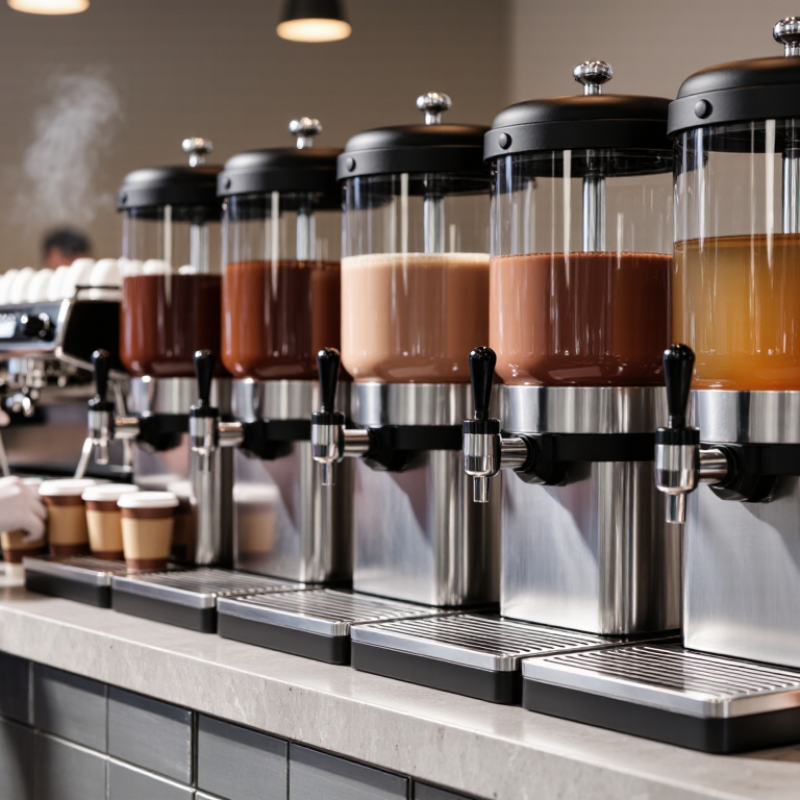
Define Beverage Demand Using Peak-Hour Volume and Daily Servings
Choosing the best hot beverage dispenser starts with demand, not appearance. Measure peak-hour volume and total daily servings before comparing equipment.
A café serving 180 cups daily may need a different dispenser than a small office serving 70. Track sales for at least five typical days. Record the busiest 60-minute period, not only the daily average. For example, 45 cups during a morning rush can quickly empty a small dispenser. Include tea, coffee, cocoa, and seasonal drinks separately. My first estimate was too high because I counted staff drinks as customer demand. Review your numbers carefully.
Tips: Keep a simple service log. Note refill times, queue length, and leftover beverage. Add a modest capacity buffer, usually 10–20 percent. Avoid choosing the largest model automatically. It may waste energy and counter space. Peak demand matters most.
Daily servings help estimate total capacity, while peak-hour volume guides dispensing speed and recovery time. A unit holding 12 liters may seem sufficient, but slow reheating can create long lines. Check how quickly it serves repeated portions. Ask whether employees can refill it safely during busy periods. Test the workflow with real cups and expected serving sizes. Also consider quieter hours, when excess capacity may reduce freshness. Demand changes. Seasonal data may be incomplete, so revisit the calculation after a month of actual use.
Match Dispenser Capacity to Demand, from 3 to 20 Liters per Unit
Choosing a hot beverage dispenser starts with demand, not appearance. The National Coffee Association’s 2024 report found that 67% of American adults drank coffee during the previous day. That figure signals steady demand, but it does not predict your busiest hour. Track sales by 30-minute intervals for at least seven operating days.
A 3-liter unit serves roughly twelve 250-milliliter cups. It suits a small office, clinic, or low-traffic breakfast counter. A 10-liter dispenser provides about forty cups, while a 20-liter model serves approximately eighty. Real output will be lower. Foam, spillage, staff drinks, and a small safety reserve reduce usable capacity. Allow about 10% to 15% for this gap. It is easy to underestimate it.
The International Coffee Organization’s 2024 market reports continue to show coffee demand facing price and supply pressure. Smaller, more frequent batches may therefore reduce waste when traffic changes. For a busy hotel breakfast period, match capacity to projected peak demand, not the daily average. If 55 guests may order drinks within two hours, a 20-liter unit offers useful breathing room. For a 16-seat café, two 3-liter dispensers may provide better flexibility than one large tank. My first estimate is often too optimistic when queues form. Test the dispenser during the busiest service, then measure refill time, holding quality, and leftover volume. Some sites need less capacity than expected. Others need a second unit, not a larger one.
Hot Beverage Dispenser Capacity by Approximate Servings
Choose capacity according to expected demand. Figures are calculated using a standard 240 mL serving size.
A 3-liter dispenser provides approximately 12 servings per full unit, while a 20-liter dispenser provides approximately 83 servings.
Verify 135°F Hot-Holding Compliance Under the FDA Food Code
Choosing a hot beverage dispenser starts with food safety, not countertop appearance. Under the FDA Food Code, hot-held time and temperature control foods should remain at 135°F or above. This standard matters for beverages containing milk, cream, eggs, or other temperature-sensitive ingredients. Local health departments may adopt different editions or additional requirements, so verify the rule in your operating area.
Select equipment with stable heat control, clear temperature visibility, and strong recovery after serving. A dispenser that reads 135°F while its outlet pours lukewarm product needs investigation. Check the beverage at several points, including the center, surface, and dispensing valve. Use a calibrated probe thermometer, and document readings during opening, peak service, and closing. Small details matter.
Test the unit under real conditions. Fill it to the normal service level, open the valve repeatedly, and observe how quickly it returns to temperature. A narrow container may lose heat faster than expected. Steam can also distort surface readings. Do not rely on the built-in display alone. I have seen operators trust one number too quickly. That shortcut creates uncertainty. Cleaning deserves equal attention, because residue around valves can affect hygiene and flow. Keep temperature logs, calibration records, cleaning schedules, and corrective actions together for inspection. A qualified food safety manager can review the process and identify weak points before an inspector does.
Compare NSF/ANSI 4 Safety Certification, Materials, and Cleaning Access
How to Choose the Best Hot Beverage Dispenser for Your Business?
A commercial hot beverage dispenser should be judged beyond capacity and appearance. NSF/ANSI 4 covers commercial cooking, reheating, and powered hot food holding equipment. Certification indicates tested sanitation and safety design, but it does not replace daily cleaning. The 2022 FDA Food Code requires potentially hazardous foods to remain at 135°F (57°C) or hotter during holding. For beverages containing milk or other temperature-sensitive ingredients, confirm the dispenser’s recovery performance, thermostat accuracy, and visible temperature display. A small temperature error can become an expensive operational problem.
Material choice matters near heat, moisture, and acidic drinks. Food-contact stainless steel is durable and easier to inspect. Type 304 stainless steel suits many beverage stations, while Type 316 may offer better resistance in chloride-heavy environments. Plastic parts should be heat-rated and clearly removable. The CDC estimates that foodborne illnesses cause about 48 million illnesses annually in the United States, with many linked to poor handling and sanitation. That figure makes cleaning access more than a convenience. It is a risk-control feature. Still, a polished exterior can hide a poorly designed valve.
Tips:
Open the lid and remove the dispensing valve before purchase. Check whether hands can reach corners, gaskets, and drain areas without special tools. Ask for NSF certification records, cleaning instructions, and replacement-part costs. Test the unit with gloves on. If staff struggle during a five-minute cleaning check, the design probably needs reconsideration.
Select Energy, Dispensing Speed, and Warranty Features by Total Cost
Choosing a hot beverage dispenser starts with total cost, not the purchase price. ENERGY STAR reports that certified commercial coffee makers can use about 20% less energy than standard models. Over a busy year, that difference matters. Measure standby hours, heating cycles, and local electricity rates before comparing equipment. A dispenser that looks inexpensive may quietly increase utility bills every morning.
Dispensing speed also affects operating cost. The National Restaurant Association’s 2024 industry report found that 77% of operators considered recruiting and retaining employees a major challenge. Faster dispensing can reduce queues and employee interruptions during breakfast peaks. Test the machine with real cup sizes, not an empty showroom container. Record the time needed for ten consecutive servings. A few seconds can become several labor hours each week.
Warranty terms deserve the same attention as energy ratings. Check coverage length, heating-element protection, response times, and repair labor. Ask whether replacement parts remain available after the warranty ends. A low-cost unit with slow service may cost more during a busy season. The U.S. Department of Energy recommends evaluating equipment through lifecycle costs, including purchase, operation, maintenance, and disposal. That method is sound, but it is not perfect. Sales forecasts can be wrong, and energy use changes with staff habits. Leave room for those uncertainties when calculating the five-year cost.
How to Choose the Best Hot Beverage Dispenser for Your Business? - Select Energy, Dispensing Speed, and Warranty Features by Total Cost
| Dispenser Configuration |
Typical Capacity |
Rated Power |
Dispensing Speed |
Estimated Annual Energy Use |
Typical Purchase Cost |
Warranty Period |
Estimated 3-Year Total Cost |
Best Fit |
|
Insulated Gravity Urn
Manual refill and serving
|
5–10 L |
1.5–2.0 kW |
1–2 L/min |
1,200–1,900 kWh |
US$180–450 |
1 year |
US$1,050–2,250 |
Low-volume offices, meetings, and occasional service |
|
Heated Batch Dispenser
Thermostatic holding tank
|
8–12 L |
1.8–2.5 kW |
2–3 L/min |
1,500–2,400 kWh |
US$450–900 |
1–2 years |
US$1,650–3,150 |
Cafés, break rooms, and moderate daily demand |
|
Plumbed High-Speed Dispenser
Direct water connection
|
10–20 L |
2.5–3.5 kW |
3–5 L/min |
2,100–3,200 kWh |
US$900–1,800 |
2 years |
US$2,850–5,100 |
Hotels, cafeterias, and high-throughput self-service areas |
|
Insulated Airpot Station
Brewed beverage held without continuous heating
|
3–5 L per airpot |
0.8–1.5 kW |
1–2 L/min |
650–1,200 kWh |
US$300–750 |
1 year |
US$1,050–2,400 |
Energy-conscious offices and intermittent service periods |
|
Modular Multi-Product Dispenser
Separate tanks for coffee, tea, or hot water
|
15–25 L combined |
3.0–5.0 kW |
4–7 L/min |
2,600–4,200 kWh |
US$1,800–3,500 |
2–3 years |
US$5,000–8,700 |
Large venues requiring product variety and rapid service |
|
Cost assumptions: electricity calculated at US$0.15 per kWh; three-year total cost includes purchase price, estimated energy use, routine cleaning and maintenance of US$150–350 per year, and typical replacement parts. Actual results vary with operating hours, beverage temperature, local utility rates, installation requirements, and service contracts.
|
FAQS
Match capacity to peak demand, not the daily average. Track sales in 30-minute intervals for seven operating days. A 3-liter unit serves about twelve 250-milliliter cups. A 10-liter unit serves about forty cups. A 20-liter unit serves about eighty cups. Real output is lower. Allow 10% to 15% for foam, spills, staff drinks, and reserve. My first estimate may be too optimistic.
A 3-liter dispenser often suits low-traffic locations. It provides roughly twelve standard cups. Keep a small reserve for unexpected visitors. If queues appear, measure refill time. A second small unit may work better than one large tank.
No. A large tank can create more leftover beverage during slow periods. For 55 guests ordering within two hours, a 20-liter unit offers useful reserve. For a 16-seat café, two 3-liter units may provide better flexibility. Test during the busiest service. Bigger is not always wiser.
Keep temperature-sensitive beverages at 135°F or above during holding. Use a calibrated probe thermometer. Check the center, surface, and dispensing valve. Record readings at opening, peak service, and closing. Test after repeated servings. The display alone is not enough.
Fill the dispenser to its normal level. Open the valve repeatedly. Measure recovery time after serving. Watch for lukewarm product at the outlet. Steam may distort surface readings. Check leftover volume at closing. Small details matter.
Food-contact stainless steel is durable and easy to inspect. Type 304 suits many beverage stations. Type 316 may resist chloride-heavy environments better. Plastic parts should be heat-rated and removable. A polished exterior can hide a poorly designed valve.
Remove the lid and dispensing valve before purchase. Reach corners, gaskets, and drain areas without special tools. Test the process while wearing gloves. If cleaning takes longer than five minutes, reconsider the design. Staff may skip difficult steps. That risk is real.
Ask for recognized sanitation certification records. Request cleaning instructions and replacement-part costs. Keep temperature logs, calibration records, cleaning schedules, and corrective actions together. Local rules may add requirements. Verify them before opening. My process can still have weak points.
Conclusion
Choosing the right Hot Beverage Dispenser begins with understanding your operation’s real beverage demand. Estimate peak-hour volume, average daily servings, and periods of high customer traffic before selecting equipment. Dispensers typically range from 3 to 20 liters per unit, so capacity should match expected demand without creating unnecessary product waste or requiring frequent refilling. A properly sized unit can support consistent service while improving workflow and customer satisfaction.
Food safety and operating costs are equally important. Confirm that the dispenser can maintain beverages at or above 135°F in accordance with the FDA Food Code, and look for NSF/ANSI 4 certification where applicable. Durable, food-safe materials, accessible cleaning areas, and simple disassembly can reduce sanitation risks and maintenance time. Finally, compare heating efficiency, dispensing speed, warranty coverage, and expected service life as part of the total cost of ownership. The best choice balances capacity, compliance, reliability, energy use, and long-term value.
 CN Soft Serve
