CN Soft Serve
Choosing an Ice Cream Cone Maker in 2026 is not just about finding the fastest appliance. The right choice depends on how often you make cones, how much counter space you have, and whether you prefer thin, crisp wafers or sturdier cones. A small electric model may suit weekend batches, while a manual iron offers more control but asks for patience and practice.
Look closely at the details that affect each batch. Adjustable heat can help you manage browning, and evenly heated plates may reduce pale centers or burnt edges. Plate size matters too: a compact surface makes smaller cones, while larger plates give you more room to shape them. Check the handle, storage footprint, cleaning instructions, and the manufacturer’s guidance for food-contact surfaces. A nonstick coating can make release easier, but it still needs gentle care.
Small things count.
This guide compares practical features rather than relying on bold claims or glossy product photos. We’ll consider ease of use, temperature consistency, capacity, durability, and overall value, along with the trade-offs behind each feature. Reviews can be useful, but results vary with batter thickness, room temperature, and shaping speed. That part is easy to underestimate. Even a capable machine may need a few test cones before you find the right timing. Use the comparisons here as a starting point, then match them to your kitchen and habits. There is no perfect pick for everyone, and some recommendations may change as models and availability shift in 2026.
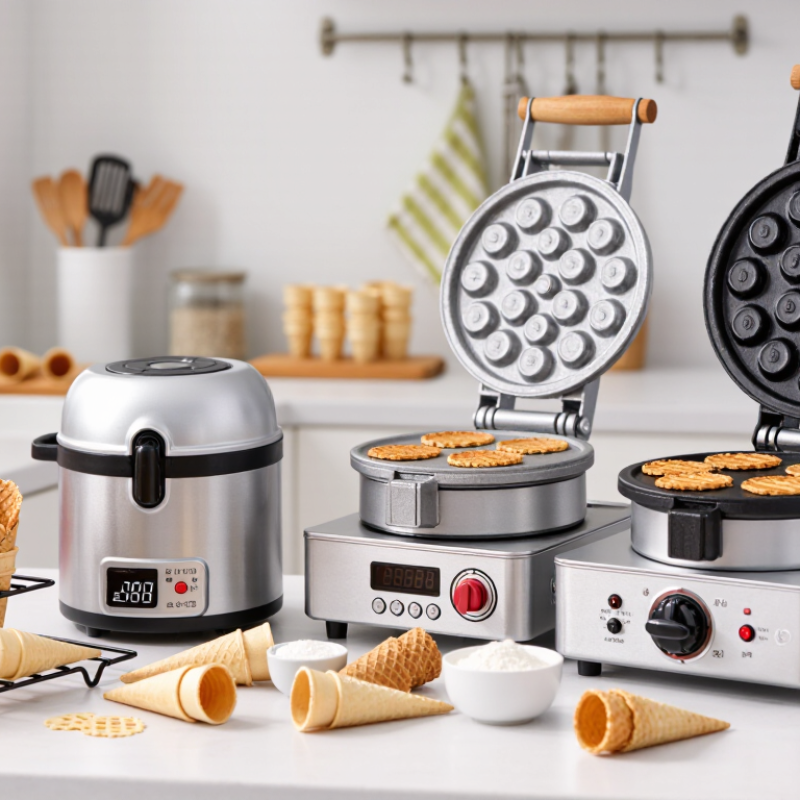
Before choosing a cone maker, estimate servings per hour, not just daily sales. The International Dairy Foods Association’s industry statistics put U.S. ice cream production at roughly 1.3 billion gallons annually, with average consumption near 20 pounds per person. These figures show a large market, but they cannot predict one shop’s demand. Your own sales log matters more. Record busy-hour orders, seasonal peaks, and how many cones staff can serve without a queue forming.
Then match batch capacity to that peak. A small café may need frequent, modest batches; a high-volume counter may need faster output and less downtime. Ask how many cones the machine produces per hour, how long reheating takes, and whether one operator can refill it safely. Check cone size, batter consistency, and available counter space. Small details matter. A cone that looks crisp at first may soften while waiting beside a cold display. I would test the maker with your actual batter and serving routine before buying. A neat manufacturer capacity figure can be misleading. Build in a little spare capacity, but avoid paying for output your busiest hour rarely needs.
In 2026, the best ice cream cone maker depends on your kitchen and the cones you want. Electric models usually offer steady heat and simple controls, which suit frequent batches. Stovetop irons need more attention, but they are compact and give you direct control over browning. Manual turning takes practice. A cone that looks golden at the edge may still feel soft in the center.
Shape matters, too. A pointed cone works well for scoops, while a flat wafer is easier to stack and serve. Bowl-shaped cones hold toppings without as much dripping. Check whether the maker includes a shaping tool; forming a hot wafer quickly can be tricky. Cooking methods vary: some machines use fixed timers, while others let you adjust heat. Thin batter cooks faster, so use color and crispness as cues rather than trusting the timer alone.
Tips: Compare plate size, heat settings, and cleanup before buying. Leave room to shape each wafer beside the machine. Test one small batch first. If cones turn brittle, reduce cooking time slightly; if they bend, cook them longer. Results can vary with batter and room humidity, so expect a little trial and error.
| Maker Type | Typical Shape | Cooking Method | Typical Result | Advantages | Considerations | Best Suited For |
|---|---|---|---|---|---|---|
| Electric waffle-cone maker | Thin round wafer rolled into a pointed cone; some models can form bowls | Heated plates cook batter on both sides. The wafer is shaped while still hot, before it firms as it cools. | Light, crisp cone with a waffle-style surface | Designed for making cones at home; controlled plate heating and repeatable shapes make the process straightforward. | Each wafer must generally be shaped promptly after cooking. Plate size and included shaping tools vary by model. | Home users who want freshly made pointed cones |
| Pizzelle iron | Patterned round wafer that can be rolled into a cone while warm | Two heated patterned plates cook a thin batter wafer. Shape it immediately after removing it from the iron. | Thin, crisp wafer with a decorative pressed pattern | Can make patterned wafers and, with a suitable rolling form, cones as well as flat cookies. | Not every pizzelle iron includes a cone-forming tool. The wafer may become difficult to shape once cool. | People who want both patterned wafers and occasional cones |
| Oven-baked wafer sheets with a cone form | Rolled pointed cones; baked sheets can also be shaped as cups or bowls if suitable forms are used | Batter is spread into thin rounds and baked on a tray. Shape each wafer while warm using a cone mold or other form. | Texture and browning depend on the batter, thickness, and oven; thin sheets can become crisp as they cool. | Uses standard oven equipment and allows flexibility in wafer size and shape. | Even thickness can take practice, and baked wafers need to be shaped quickly while pliable. | Occasional batches or cooks who prefer using an oven |
| Commercial cone-baking machine | Often pointed cones; production equipment may use dedicated forms for different sizes or styles | Mechanized heated plates or molds bake wafers in repeated cycles; forming and production steps depend on the machine. | Consistent products when the equipment is correctly set up and operated | Built for higher-volume, repeated production compared with typical household equipment. | Requires more space and investment than a home appliance; capacity, setup, and compatible shapes vary substantially. | Food-service or production settings with regular demand |
Choosing tip: For home use, compare plate size, temperature controls, ease of cleaning, and whether a cone roller or bowl-forming accessory is included. Regardless of method, freshly cooked wafers are easiest to shape while warm; handle them carefully because they retain heat.
When choosing an ice cream cone maker, match its capacity to your usual batch size. A compact model may suit a household making two cones at a time, while frequent entertaining calls for a larger cooking surface. Check how many cones it can make per cycle, not just the advertised hourly output. Small batches help. Counter space matters, too.
Tips: Look for adjustable temperature settings and a clear preheat indicator. Consistent heat helps cones brown evenly without scorching their thin edges. Read the cleaning instructions before buying; removable plates can make wiping away crumbs easier.
Ease of use becomes obvious after several batches. A secure handle, readable controls, and a stable base make cooking less fussy. Check whether the plates are nonstick and whether the manual explains safe cleaning. I would not choose solely by the highest temperature setting; even heat and simple controls are often more useful. One detail is easy to overlook: cone shaping takes practice, and the first few may crack. A machine cannot fix every technique issue, so consider whether its instructions show when to roll each warm cone.
Check the cooking plates and cone surface for food-contact-safe materials and durable, intact finishes. Stainless steel and coated metal are common, but a scratched coating deserves attention. A shiny surface alone proves little. The FDA Food Code offers a useful hygiene benchmark: food-contact surfaces should be smooth, durable, and easy to clean. CDC estimates that 48 million people in the United States get sick from foodborne illnesses each year, making everyday sanitation worth considering.
Look for removable plates or accessible edges where batter can collect. A narrow hinge can trap crumbs and become frustrating to clean. Confirm the manual’s cleaning instructions before buying; some surfaces need a damp cloth, not soaking or abrasive pads. For safety, check for cool-touch handles, a stable base, and clear power or heat indicators. Automatic shutoff is useful, but never assume a feature replaces supervision. Small details matter.
Tips: Unplug the maker and let it cool before cleaning. Wipe away a small batter spill before it hardens. Inspect the coating regularly; replacement guidance is easy to overlook.
When comparing ice cream cone makers in 2026, read the warranty before judging the price. Check how long coverage lasts, which parts are included, and whether shipping or labor costs fall to you. A short warranty is not automatically a deal-breaker, but vague exclusions deserve attention. Keep the receipt and save the warranty terms. Small paperwork, real value.
Reviews can reveal details a product description leaves out. Look for repeated comments about uneven browning, loose hinges, or cones that soften quickly. One complaint may reflect a faulty unit; the same issue across recent reviews is more meaningful. Notice how reviewers describe frequency of use, too. A machine used weekly faces different demands than one used twice a year. Still, ratings can be messy, and I would not treat every polished review as reliable evidence.
Long-term value depends on more than the purchase price. Consider replacement plates, available parts, cleaning effort, and whether the maker produces consistent cones after months of use. If you make cones often, easier maintenance may save frustration. For occasional treats, a simpler model may be enough. Calculate cost per use, but be honest about how often you will actually use it. That estimate is easy to inflate. A dependable machine should fit your kitchen habits, not an idealized version of them.
Compare warranty coverage, customer reviews, and long-term value before you buy.
How to use this chart: These are suggested decision weights, not survey results or product ratings. Compare each maker’s written warranty, patterns in verified customer reviews, and expected ownership costs (including durability, cleaning, and replacement parts). Adjust the weights to fit your priorities.
Match its cooking surface to your usual batch size. Check cones per cycle, not only hourly output. Counter space matters.
Even heat helps cones brown without scorching their thin edges. A preheat indicator can make timing easier.
Roll each cone while it is warm, following the maker’s instructions. The first few may crack. Practice helps, though.
Look for smooth, durable cooking plates with food-contact-safe materials. Scratched coatings need attention; a shiny finish proves little.
Removable plates and accessible edges help you clear crumbs. Check the manual; some surfaces need a damp cloth, not soaking.
A stable base, clear heat indicators, and cool-touch handles can help. Unplug the maker and let it cool before cleaning. Supervision still matters.
Repeated reports of uneven browning or loose hinges may reveal useful patterns. One complaint may be an isolated fault. Reviews can be messy.
Check coverage length, included parts, and possible shipping or labor costs. Consider cleaning effort and replacement parts, too. Be realistic about how often you will use it.
Choosing the best Ice Cream Cone Maker in 2026 starts with understanding how often you plan to make cones and how many you need per batch. Consider whether a compact model suits occasional home use or whether greater capacity is important for frequent gatherings. Compare available cone shapes and cooking methods, then look for practical controls that make it easier to achieve consistent results. Adjustable temperature settings, clear indicators, and simple operation can all make the process more manageable.
Before deciding, check the maker’s materials, cleaning requirements, and safety features, such as heat-resistant handles and a stable base. Think about how easily the cooking surfaces can be cleaned and stored, especially if counter space is limited. Finally, compare warranty coverage, customer feedback, and expected durability rather than choosing on price alone. The right option should match your batch size, be straightforward to maintain, and offer dependable long-term value for your needs.
