CN Soft Serve
Choosing the 2026 best Custom Ice Cream Machine is not simply a matter of comparing prices or production capacity. Global buyers need equipment that matches their recipes, local utilities, labor skills, and service expectations. A compact café machine may produce 20 liters per hour, while a factory line may require continuous freezing, automated cleaning, and remote monitoring. The details matter.
Dr. Bruce Tharp, a respected ice cream technology educator, states, “Good ice cream begins with controlled processing.” His point remains important for every Custom Ice Cream Machine evaluation. Stable freezing temperatures, accurate overrun control, food-grade materials, and reliable hardening performance directly influence texture and customer satisfaction. Buyers should also examine compressor efficiency, water consumption, voltage compatibility, spare-parts access, and operator training. A beautiful machine can still become an expensive problem.
There is no universal winner.
This guide compares leading options for international buyers in 2026. It considers customization, output, hygiene design, energy use, installation support, and long-term maintenance. Real purchasing decisions are rarely perfect. A machine with advanced automation may be difficult to repair in a remote market. A lower-cost model may save money initially but create delays later. These weaknesses deserve attention, not marketing language.
The best choice is the machine that performs consistently in its actual environment. Before ordering, buyers should test the intended mix, confirm electrical standards, review warranty terms, and request documented production data. This practical approach supports safer decisions and more dependable results across cafés, dessert shops, hotels, and industrial facilities.
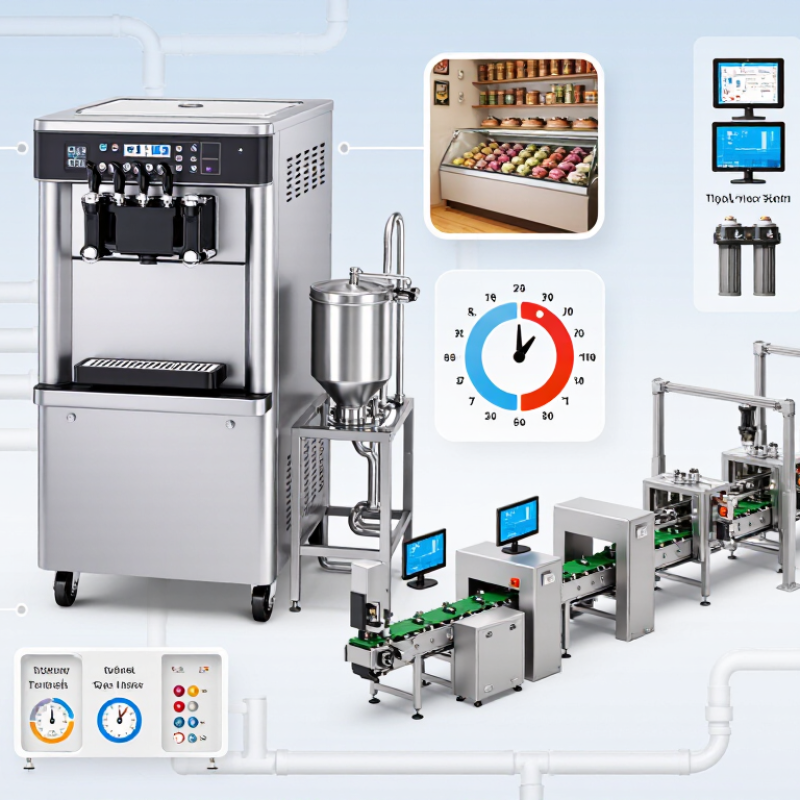
A custom ice cream machine is equipment designed around a buyer’s production needs, not merely decorated with a private label. Its capacity, freezing method, hopper size, voltage, control system, and cleaning access can all be adjusted. For a small dessert shop, a compact countertop unit may reduce waste. A central kitchen may need stronger output, automatic temperature control, and easier ingredient loading. The right design starts with daily production data.
In practical purchasing work, I check serving volume, peak hours, recipe thickness, ambient temperature, and available floor space. These details affect freezing speed and motor performance. A machine can look impressive but still struggle during a busy afternoon. Maintenance access matters too. Operators need removable contact parts, clear instructions, and reliable temperature readings. Safety features, electrical compatibility, food-contact materials, and documented testing should be verified before shipment. Requirements differ across markets, so buyers should confirm local import and installation rules with qualified professionals.
Tips: Ask for a sample production test. Request noise, power, capacity, and cleaning data. Confirm spare-part availability and service response times. Do not judge customization by appearance alone. Real value is measured during repeated production. I once underestimated cleaning time on a seemingly efficient design. That was a useful mistake. A better machine balances output, hygiene, energy use, operator comfort, and long-term serviceability. Some specifications may need revision after testing. That is normal.
Choosing a custom ice cream machine should begin with production facts, not attractive specifications. Grand View Research valued the global ice cream market at approximately USD 79 billion in 2023. Its forecast also indicates steady growth through 2030. This demand does not mean every buyer needs a high-capacity line. A café may require 30 liters per hour, while a central kitchen may need several hundred. Measure peak-hour demand, seasonal sales, serving size, and planned expansion.
Product characteristics matter just as much. High-fat recipes, fruit pieces, and plant-based mixes can require different freezing power and agitator designs. Record mix viscosity, inlet temperature, target overrun, and cleaning frequency. A small detail, but important. The machine should also match local voltage, water conditions, operator skills, and food-contact requirements. Reports from the International Dairy Foods Association show continuing consumer interest in premium and differentiated frozen desserts, so flexible recipe control can create practical value.
Customization should solve a defined problem. Ask for adjustable freezing speed, insulated cylinders, automatic cleaning options, and data logging when they support your workflow. Do not pay for every available feature. My early capacity estimate would probably be too optimistic without real sales records. That is worth admitting. Request factory testing with your actual mix, not plain water. Review temperature stability, recovery time, noise, spare parts, and service response before signing. A lower purchase price can become expensive when downtime interrupts production.
2026 Best Custom Ice Cream Machine for Global Buyers?
The best custom ice cream machine depends on the market, not only on output. A coastal café may need corrosion-resistant panels and strong cooling. A busy urban shop may prioritize rapid freezing, high hourly capacity, and short recovery time. In regions with unstable electricity, voltage protection and restart memory are practical necessities. These details often matter more than attractive touchscreen controls.
Temperature and mix consistency also vary by location. Tropical stores need reliable performance in hot rooms, while colder markets may require adjustable chilling cycles. Machines should support local voltage, available water quality, and familiar cleaning routines. Food-contact materials and electrical certifications must match destination requirements. Check this before discussing production volume. A machine can produce excellent texture yet fail during daily sanitation. That is an expensive oversight.
Tips: Ask for test samples using your actual recipe. Measure texture after ten minutes, not only at startup. Confirm spare-part availability, remote diagnostics, and technician training. Request manuals in the operator’s working language. Leave room for honest uncertainty; projected sales may change after launch. Customization can improve results, but excessive options may complicate maintenance. In my view, simple controls and clear service access often outperform impressive features. Reviewers should also record noise, cleaning time, and power use during a full working day.
Which machine features matter most for different markets?
The index is a market-planning benchmark from 0 to 100, reflecting practical priorities such as climate, utility compatibility, hygiene expectations, available space, and operating costs. Higher values indicate greater importance when customizing a commercial ice cream machine.
2026 Best Custom Ice Cream Machine for Global Buyers?
Choosing a custom ice cream machine in 2026 is not only a capacity decision. In supplier reviews, I check production records, test reports, and service response times. A factory visit can reveal practical details, such as uneven welding or difficult-to-clean corners. Price can hide risk. I once trusted a polished sample and overlooked its slow drainage, which later affected cleaning time.
Compliance must match the destination market. Ask for electrical safety documents, food-contact material declarations, and refrigerant information. Confirm voltage, frequency, plug type, language requirements, and required markings before payment. Documents should identify the exact model, not a similar machine. A supplier’s certificate is useful, but independent verification is safer. Requirements can differ between countries, and assumptions create expensive delays.
Compare total landed cost, not the quotation alone. Include tooling, customized molds, packaging, freight, insurance, import duties, installation, training, spare parts, and expected energy use. Request a written warranty with clear response times. Check whether replacement seals, pumps, and control components are locally available. A low purchase price may become costly after repeated service visits. My spreadsheets still miss surprises sometimes, especially port storage and regional taxes. Leave a contingency budget, and ask suppliers to explain every unclear charge in writing.
How to compare suppliers, compliance requirements, and total ownership costs before placing an international order.
| Machine Type | Typical Output | Typical Batch or Serving Format | Indicative Equipment Price | Typical Electrical Requirement | Best-Fit Buyer | Key Compliance Checks | Typical Production Lead Time | Expected Service Life |
|---|---|---|---|---|---|---|---|---|
| Countertop soft-serve machine | Approximately 18–35 litres per hour, depending on mix, overrun, and operating conditions | Continuous dispensing; commonly 1–2 flavours | US$2,500–US$8,000 before freight, tax, installation, and accessories | Typically 220–240 V, single phase; approximately 2.0–4.5 kW | Small cafés, kiosks, seasonal retail points, and limited-footprint stores | Electrical safety EMC Food-contact materials Refrigerant compliance | 4–10 weeks for standard configurations; longer for custom panels or controls | 7–10 years with scheduled cleaning and preventive maintenance |
| Floor-standing soft-serve machine | Approximately 35–75 litres per hour, subject to product temperature and serving size | Continuous dispensing; commonly 2 flavours plus a twist option | US$6,000–US$18,000 before international delivery and local commissioning | Commonly 220–240 V single or three phase; approximately 3.5–8.0 kW | High-volume dessert shops, restaurants, food courts, and amusement venues | Electrical safety EMC Hygienic design Pressure-system safety | 6–14 weeks; custom refrigeration and dispensing systems may require more time | 8–12 years with qualified servicing and replacement of wear parts |
| Batch freezer | Approximately 5–25 litres per batch, with cycle times commonly around 8–15 minutes | Batch production for gelato, ice cream, sorbet, and similar frozen desserts | US$5,000–US$20,000 before shipping, duties, and commissioning | Commonly 220–240 V; approximately 2.5–7.5 kW | Gelato shops, artisan producers, restaurants, and test kitchens | Food-zone cleanability Electrical conformity Refrigerant rules Operator safety | 6–16 weeks depending on hopper size, control system, and cooling method | 8–12 years under correct cleaning and refrigeration maintenance |
| Hard ice cream dipping cabinet system | Storage and service capacity commonly ranges from 6 to 24 tubs | Pre-frozen product stored in pans or tubs for scoop service | US$2,000–US$12,000 depending on capacity, cabinet format, and temperature control | Commonly 220–240 V single phase; approximately 0.8–3.0 kW | Retail counters, supermarkets, hotels, and dessert parlours | Food-contact surfaces Temperature control Energy efficiency Local electrical approval | 4–12 weeks for standard cabinets; custom layouts may take longer | 7–10 years with condenser cleaning and gasket replacement |
| Pasteurizer plus batch-freezer line | Approximately 30–120 litres per hour, depending on tank size and recipe cycle | Mix preparation, heat treatment, maturation, and batch freezing | US$18,000–US$70,000 before site utilities, freight, and installation | Commonly 380–415 V, three phase; approximately 8–25 kW | Central kitchens, multi-outlet operators, contract production, and export-oriented manufacturers | Food-processing machinery Thermal-process validation Hygienic piping Factory acceptance testing | 10–24 weeks, including engineering, fabrication, testing, and documentation | 10–15 years with planned maintenance and trained operators |
| Fully custom automated production line | Approximately 100–1,000+ litres per hour, depending on the process layout | Integrated mixing, pasteurising, ageing, freezing, filling, hardening, and packaging | US$80,000–US$500,000+ before building works and commissioning | Usually 380–415 V three phase; site load must be calculated by an engineer | Industrial manufacturers, large retail suppliers, and high-volume private-label production | Risk assessment Machine guarding HACCP controls Traceability Country-specific certification | 5–12 months, including design approval, fabrication, validation, and site acceptance | 12–20 years when maintained under an industrial preventive-maintenance programme |
2026 Best Custom Ice Cream Machine for Global Buyers?
How to Plan International Delivery, Setup, and Support
A custom ice cream machine needs more than strong production capacity. International buyers should confirm voltage, plug type, water access, drainage, and available floor space before ordering. These details affect shipping documents and installation time. Ask the manufacturer for crating dimensions, gross weight, and loading instructions. Our first delivery plan looked complete, yet the machine could not pass through the customer’s narrow service entrance. Measure the route, not only the final position.
Tips: Request a video inspection before dispatch. Photograph the crate from every side. Keep spare seals, sensors, and cleaning tools on site. Confirm who pays duties, storage fees, and local handling charges. Small gaps in responsibility can become expensive delays.
Setup should include remote guidance and a trained local technician. A clear manual must show cleaning steps, temperature settings, safety checks, and error codes. Use simple language, especially when several teams speak different languages. The support plan should state response times, spare-part availability, and escalation contacts. Test the machine with the actual mix before full production. This reveals texture changes, overrun problems, or unstable freezing. Do not assume factory settings suit every climate. Hot rooms, hard water, and irregular power can affect performance. A reliable supplier will discuss these risks honestly, even when the answer is inconvenient. Some plans need revision. That is normal.
Measure peak-hour demand, serving size, seasonal sales, and expansion plans. A small café may need 30 liters per hour. A central kitchen may need several hundred. Early estimates can be too optimistic. Use real sales records when possible.
Record fat level, fruit pieces, plant-based ingredients, mix viscosity, inlet temperature, and target overrun. Thick mixtures may need stronger freezing and agitation systems. Small details matter.
Yes. Ask for factory testing with your real mix, not plain water. Check texture after ten minutes. Measure temperature stability and recovery time. Startup results alone can mislead.
Tropical locations need reliable cooling in warm rooms. Strong cooling systems may protect texture and production speed. Corrosion-resistant panels can help in coastal areas. Local water conditions still require checking.
Voltage protection and restart memory are practical features. Confirm compatibility with local voltage before discussing output. A machine that stops often loses more than production time.
Rapid freezing, high hourly capacity, and short recovery time can support busy periods. Simple controls may reduce operator mistakes. Attractive screens are not always useful.
Review cleaning frequency, automatic cleaning options, water quality, and food-contact materials. Check cleaning time during a full working day. Excellent texture means little if sanitation becomes difficult.
Review noise, power use, spare-part access, service response, and technician training. Request manuals in the operator’s working language. Confirm remote diagnostics if they support daily operations. A low purchase price can become expensive during downtime.
A Custom Ice Cream Machine is designed around a buyer’s specific production, product, and operating requirements rather than relying on a standard model. Global buyers should first define expected output, product types, serving formats, available space, energy supply, automation level, and future expansion plans. These goals help determine the appropriate freezing method, hopper capacity, temperature control, cleaning system, flavor flexibility, and packaging compatibility for different markets.
Supplier evaluation should cover equipment quality, customization capability, documentation, testing, food-contact materials, safety requirements, warranty terms, spare parts, and technical support. Buyers should compare the total cost of ownership, including shipping, installation, training, maintenance, energy use, and possible upgrades—not just the purchase price. International delivery also requires careful planning for transport conditions, import procedures, site preparation, commissioning, operator training, and long-term after-sales assistance. With clear specifications and realistic production targets, businesses can select a reliable machine that supports consistent quality, efficient operations, and sustainable growth across multiple markets.
